Hot, then cold, then hot again, half the night.
It starts at night for many of us, the blanket on, the blanket off, a small pointless war with the thermostat no one else is fighting. What a hot flash actually is, and why it can arrive long before 50.
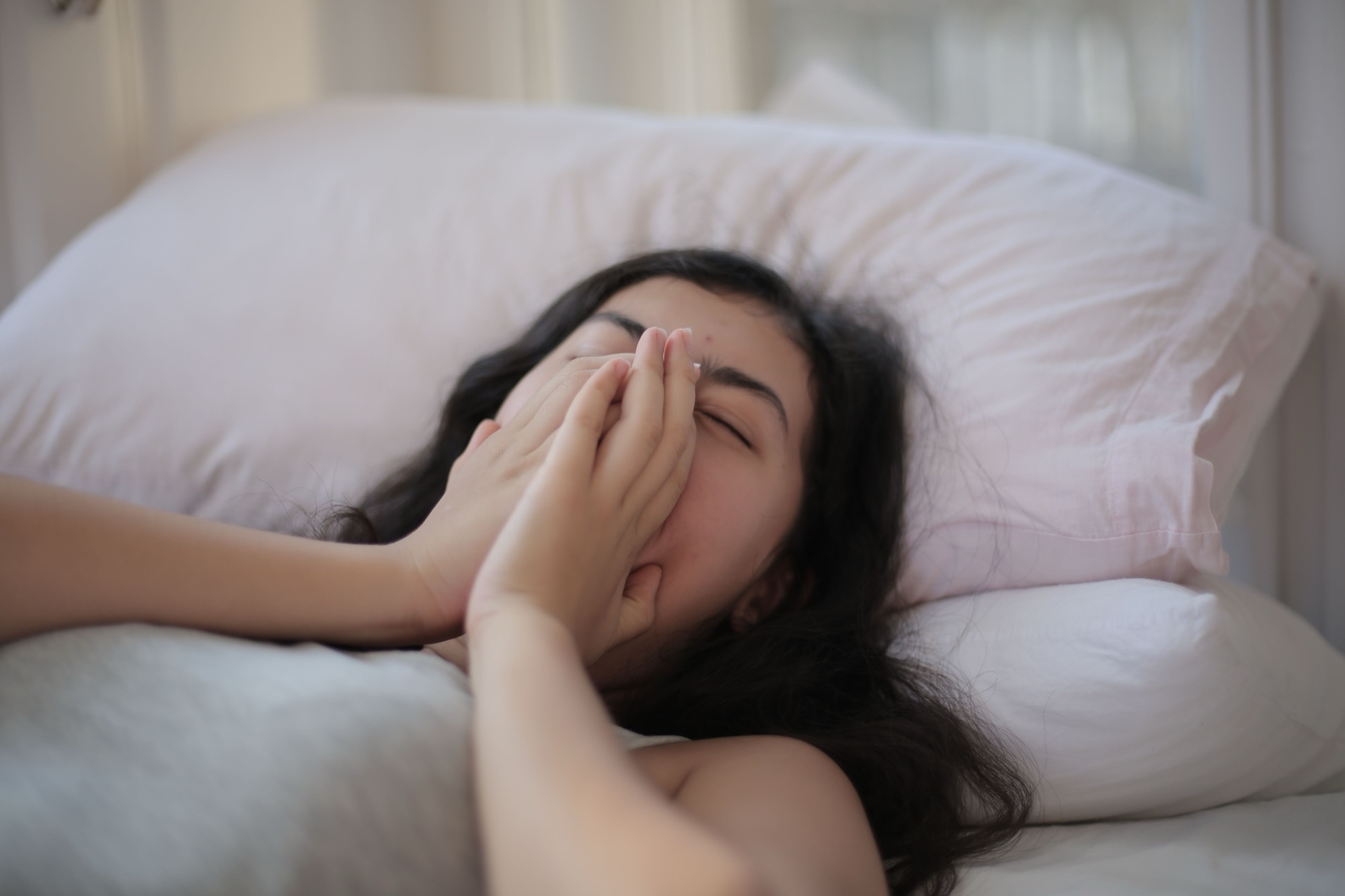
Mine started at night, which is its own particular cruelty.
I would be asleep, or nearly, and then the heat would come. Not a gentle warmth. A flood of it, up the chest and into the face, until I had thrown the blanket off and turned the AC down to its lowest, coldest setting. Relief for about 5 minutes. And then the cold would arrive, just as suddenly, and I would be reaching for that same blanket and turning the AC back up. Then hot again. Then cold. Every 5 to 10 minutes, half the night, a small pointless war with the thermostat that nobody else in the house was fighting.
You do not sleep through that. You cannot. And the next day you are tired and short and a little unhinged, with no clean explanation for any of it.
This started for me at 39, just before I turned 40. And here is the part nobody mentions, so I will. After a while, it eased off on its own. It does not always come to stay. Sometimes it arrives for a season and then quietly recedes. Which does not make it any less maddening while it is happening. It is, to put it plainly, irritating to the core, much like a great deal of what our bodies hand us without a note of explanation.
For a while I did not even know what it was. I had never had a hot flash in my life, so it did not occur to me that this was one. You cannot recognise a thing nobody ever taught you to name.
And the strange part is, I had seen it before. My mother. Years ago I watched her go hot, then cold, then hot again, fanning herself, opening windows, and I remember being young and thinking, what is this, why is she like this every few minutes. Nobody explained it. She never spoke about it, the way our mothers mostly did not speak about any of this. It was just something women did quietly, behind a closed door, on their own. I understand now what she was carrying. I wish I had known then. I wish someone had told us both.
Because the thing I genuinely believed was that I had time. We are all taught, somewhere along the way, that this happens at 50. That it is a menopause event, and menopause is years off, so surely not yet, surely not me. Nobody hands you the chapter about the decade before, the one that already has your name on it.
So if it has started for you and you are nowhere near 50, let me tell you what took me far too long to work out.
What does a hot flash actually feel like?
It is not subtle, and it is not in your head. A hot flash is a sudden rush of heat, usually across the face, neck, and chest. Your skin might flush or go blotchy. You may break into a light sweat, or feel your heart quicken for a moment. Some women feel something almost like a flicker of panic ride along with it, which is part of why it gets mistaken for anxiety. And then, as it passes, that cold shiver, the one that sends you reaching for the blanket you just threw off.
In the day it ambushes you in a meeting or a queue. At night it is the version I had, the one that turns your bed into a battlefield. Same event, different hour. Most last between a few seconds and a few minutes. Some women get one a week. Some get a dozen a day. There is no correct amount.
What causes hot flashes in perimenopause?
The short version: your body's internal thermostat has gone a little oversensitive.
Deep in your brain sits the part that keeps your temperature steady. During perimenopause, as your estrogen rises and falls in a way it never used to, that thermostat narrows its idea of comfortable. A small change it would once have ignored now reads as overheating, and it responds as if you genuinely are. It opens the blood vessels near your skin, floods you with warmth, and turns on the sweat to cool you. The heat is your body trying to look after you. It is just doing it over nothing at all.
This is biology, not fragility. Around three quarters of women go through it somewhere in the transition. You are in very ordinary company, even at 39.
Are night sweats the same as hot flashes?
Yes. A night sweat is simply a hot flash that turns up while you are asleep, which is to say, my entire introduction to the thing. You wake at 2 or 3am, the sheets damp, kicking off the covers and then, minutes later, cold and pulling them back. Do that a few times a night and your sleep is gone, and most of your patience for the next day with it.
If your sleep has quietly come apart lately and you could not say why, this may well be part of it. We wrote about the way all of this wrecks your sleep in Tired, Snapping, Not Sleeping, and Every Test Comes Back Normal.
What helps with hot flashes?
I will be honest, the way the internet usually is not. There is no single trick that switches them off. But there are things many women find make them easier to carry.
Cool layers you can take off without thinking. Cotton instead of synthetics. A cooler bedroom and a cotton pillowcase for the nights, a small mercy when the nights are the whole problem. And learning your own triggers, because they are personal. For one woman it is a hot drink, for another a glass of wine, a stressful afternoon, a heavy dinner. Yours are worth knowing, because the moment you can see the pattern, it stops ambushing you.
One gentle thing worth saying, because you may have already been to a doctor and come away with nothing. Many doctors were barely taught this. The years around menopause get a sliver of time in medical training, far less than a thing that affects half the population should get, which is part of why so many women get waved off with it is just stress. It is usually not that your doctor does not care. It is that the system decided this was not worth teaching properly. That is slowly changing. Until it does, it is worth finding someone who actually knows this area.
And then there is hormone therapy. It is the most studied option for hot flashes, and for many women it genuinely works. It also picked up a frightening reputation about twenty years ago from research that has since been read far more carefully, which scared a lot of women off something that might have helped them. I am not going to tell you to take it, or to avoid it. That is a conversation between you and a doctor who knows the area and your own history. We wrote a fuller, honest piece on hormone replacement therapy on its own, because it deserves more room than a paragraph.
What I wish someone had told me
If there is one thing I wish someone had said to me on the first of those sleepless nights at war with the thermostat, it is this. You are not unwell. You are not imagining it. Your body has begun a normal, named, very common shift, and the heat is one of the ways it tells you. It might stay a while. It might pass. Either way, it is not the beginning of you falling apart.
Knowing what it is changes everything. It turns a frightening little mystery into something you can name, work around, and stop being afraid of. My mother never got that. You can.
Stree Sense writes to help you understand your body, not to diagnose or treat. For anything that worries you, take it to a doctor.
← All journal entries