Why strength training matters more after 40 (and nobody says so).
Most of us made working out and losing weight the same sentence. Separate them, and the point after 40 turns out to be your muscle and your bones, at exactly the moment estrogen stops helping you keep them.
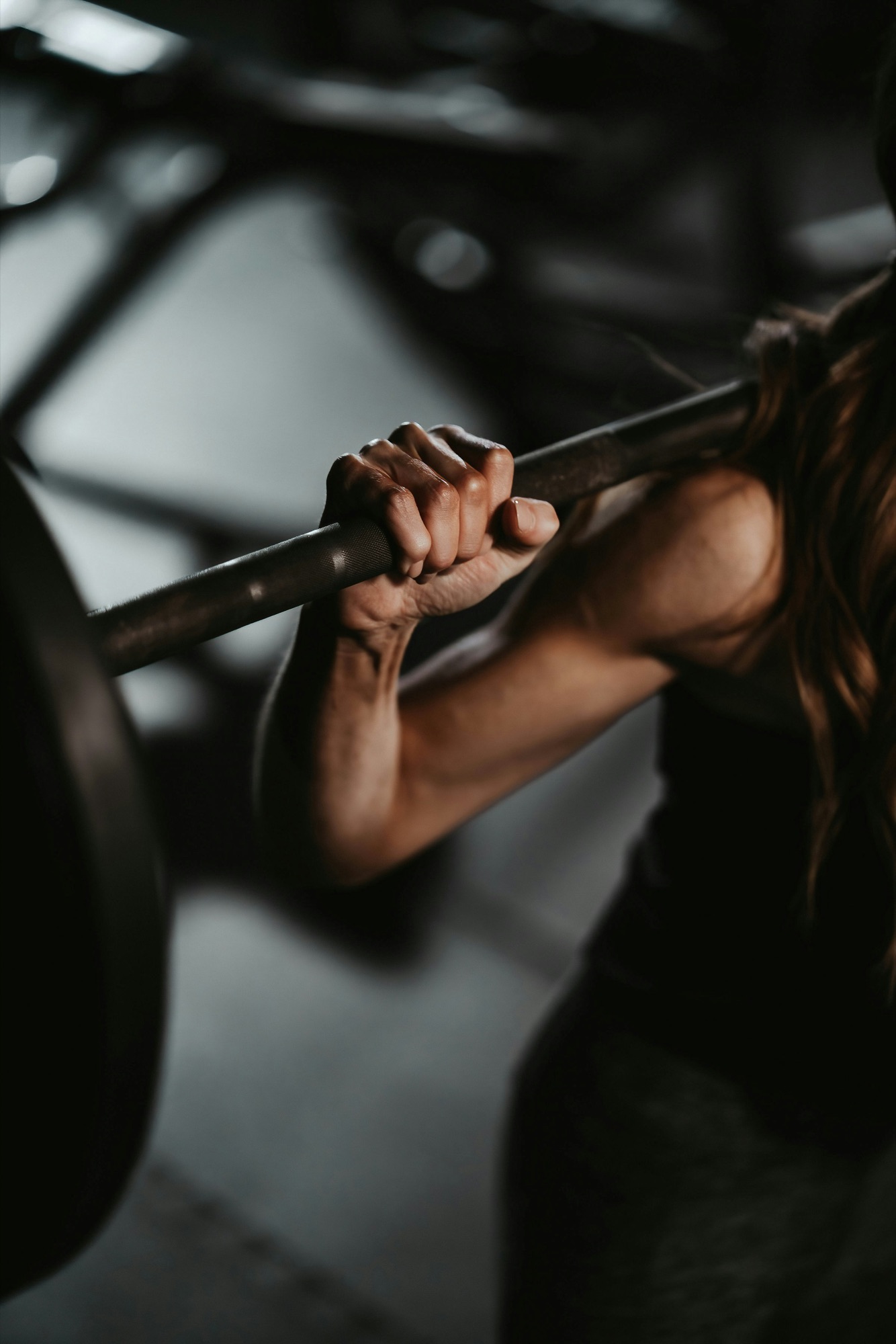
Let me start with the single biggest mistake most of us have made, and I include myself in this. We equated working out with losing weight. Somewhere along the way the two became the same sentence in our heads. You move your body to be smaller. Full stop.
Separate those two things, and I promise you a whole new world opens up. The minute I stopped treating movement as a punishment for the crime of existing in my body, and started treating it as something I do for my body, a mental block I did not even know I was carrying simply lifted.
Because here is what I actually want now, and what I did not understand for years. I do not want to wreck myself with some brutal workout in the name of a number on a scale. I want to keep my strength. I want to hold on to my muscle and protect my bones. And it turns out that is not vanity at all. It is one of the most useful things a woman my age can do, and almost nobody bothers to explain why.
So let me sit you down and tell you the thing I wish someone had told me.
Why does muscle matter as you age?
Start with something that is true for every human being, men, women, everyone alike. From your 30s onward, you slowly lose muscle. It goes at roughly 3 to 8% a decade, and it speeds up as you get older.
This is not about looking toned. Muscle is your strength. Your balance. Your steadiness on your own two feet. It is a huge part of what lets you stay independent and unbroken into old age. Losing it quietly, year after year, is a big part of what ageing actually is. And strength work is the one thing that slows it down, and even wins some of it back. For everybody.
Now, the part specific to women. Estrogen had been quietly helping you hold on to that muscle, and helping keep your bones strong. As it falls in perimenopause, the muscle gets harder to keep, and bone loss speeds up. So the ordinary slide of ageing gets a hormonal shove, at exactly the moment you are least likely to connect it to anything.
And here is the one nobody warns you about. As estrogen drops, your body starts storing fat differently. It shifts it to your middle, around the abdomen, even when nothing about how you eat has changed. That softness around your belly that seemed to appear out of nowhere in your 40s? That is partly this. It is not a failure of willpower. It is your hormones quietly redrawing the map.
What is the big deal about bone density?
This is the one I most want to land, because it is the part with real stakes, and it is almost never spoken about until it is too late.
Bone is living tissue. You spend your younger years building it up, you hit your peak somewhere in your 30s, and after that it is about holding on to what you have. Estrogen was a big part of what kept that going. When it drops, bone loss speeds up, and it does so in complete silence. The numbers are genuinely startling: women can lose up to 10 to 20% of their bone density in the 5 to 7 years around menopause. And you feel none of it. No ache, no signal, nothing you can point to. The first time many women learn their bones have thinned is when one breaks, from a fall that should not have broken anything.
That sounds frightening, and I am not going to pretend it is not serious. But the reason I am telling you is the opposite of frightening. This is one of the few parts of the whole transition where what you do genuinely moves the needle. Bone responds to being loaded. Muscle responds to being used. Your body is asking for a specific kind of work, and unlike so much of perimenopause, this is a lever you can actually pull.
Isn't walking or yoga enough?
They are wonderful, and I would never talk you out of either. But read that again, because this is the bit that matters.
Strength. Not cardio, and not yoga. I said strength.
Walking and yoga matter, genuinely, and I do both and love both. But muscle and bone respond to one particular thing, resistance, being asked to work against a bit of weight. That is the signal that tells your body to hold on to muscle and to keep laying down bone, and it is the one signal cardio and stretching do not send very loudly. Ageing, at its core, is the slow loss of muscle, protein and strength. Strength work is what pushes back against exactly that. Wanna age like you've not aged? This is where it lives. Two things, really: strength training, and giving your body enough protein to hold on to what you build.
Okay, but how do I start without hurting myself?
Here is the good news, and it is the part that changed everything for me the moment I stopped chasing weight loss. You do not need a punishing routine. You need a consistent one.
Consistency beats intensity every single time. A mad, exhausting session that leaves you wrecked and dreading the next one is worse than useless, because you simply will not go back. Something gentle that you actually keep doing is what changes your body. Even 15 to 20 minutes, a few days a week, will do the magic. Start there. Once it begins to feel easy, and it will, scale up slowly, a little more weight, a little more time.
And you do not need to spend a bomb at a gym for any of this. A great deal of it can be done at home, and there are some genuinely good videos online for home workouts to follow along with. But, and I mean this with my whole heart, please, please, please start slow and watch your form. Poor posture is how people get hurt, and an injury is the fastest route back to the sofa. If you possibly can, let someone who knows what they are doing show you the basics first, even once. Slow and steady really does win this race. It has never been truer.
And here is the quiet gift in all of it. Once you stop measuring this by the scale, the pressure lifts. There is no daily number waiting to disappoint you. So you get to treat it the way you treat brushing your teeth or eating your meals. Not an event, not a project, just a small, ordinary thing you do, because it keeps you well.
I've never lifted anything heavier than my handbag
Then you are in excellent company, and there is genuinely good news in the science here.
Muscle and bone respond at every age. Women who start in their 40s, their 50s, even later, see real gains, in strength, in bone, in balance, in the plain confidence of feeling capable in your own body again. The idea that this ship has sailed is simply false, and it is a lie that keeps far too many women sitting still when they have everything to gain. You are not too late. If anything, you are arriving exactly when your body needs it most.
A few quick questions
- Can strength training help with perimenopause symptoms?
- Many women find it steadies mood, sleep and energy, on top of the muscle and bone benefits. It will not stop the hormonal shift or replace medical care, but as levers you can pull yourself go, it is one of the best.
- Will lifting weights make me bulky?
- Almost certainly not. Building large muscles takes years of very deliberate effort, and the hormonal shifts of this decade make it harder, not easier. What most women get instead is strength, shape and steadier energy.
- Is it too late to start in my 40s or 50s?
- No. Muscle and bone respond to training at every age. Starting now is one of the most useful things you can do for the decades ahead, and the gains tend to come faster than women expect.
- Do I need a gym?
- No. What matters is resistance, your body working against some form of load, and that can happen perfectly well at home. Beginning sensibly, with good form, matters far more than the setting.
Here is the reframe I want you to walk away with. Strength training after 40 is not about chasing the body you had at 25, and it is absolutely not vanity. It is you quietly building a body that will carry you, steadily and capably, through the decades still ahead. It is one of the few places in this whole transition where the power sits squarely in your hands.
And knowing which of your own symptoms are shifting, and whether they ease as you get stronger, is its own kind of clarity, the sort that is hard to hold in your head across months. That is the quiet work Stree Sense was built for, a companion noticing your patterns day after day, so you can see what is actually helping rather than guessing.
So, in the spirit of your own good instinct here: start. Smaller than you think, and sooner than you feel ready. Not to fix yourself, because there is nothing to fix, but because the years ahead are worth being strong for, and you get to walk into them capable, steady and entirely unbothered. Make it a quiet habit, like brushing your teeth. Slow and steady. That is the whole secret.
If you want to understand what your own body has been signalling, the decoder takes a few minutes. A handful of questions, and a gentle read on what it might mean.
Stree Sense writes to help you understand your body, not to diagnose or treat. For anything that worries you, take it to a doctor.
← All journal entries